Gachagua Claims Akorino State House Event Was Filled With “Brokers” Including Moses Kuria Allegation

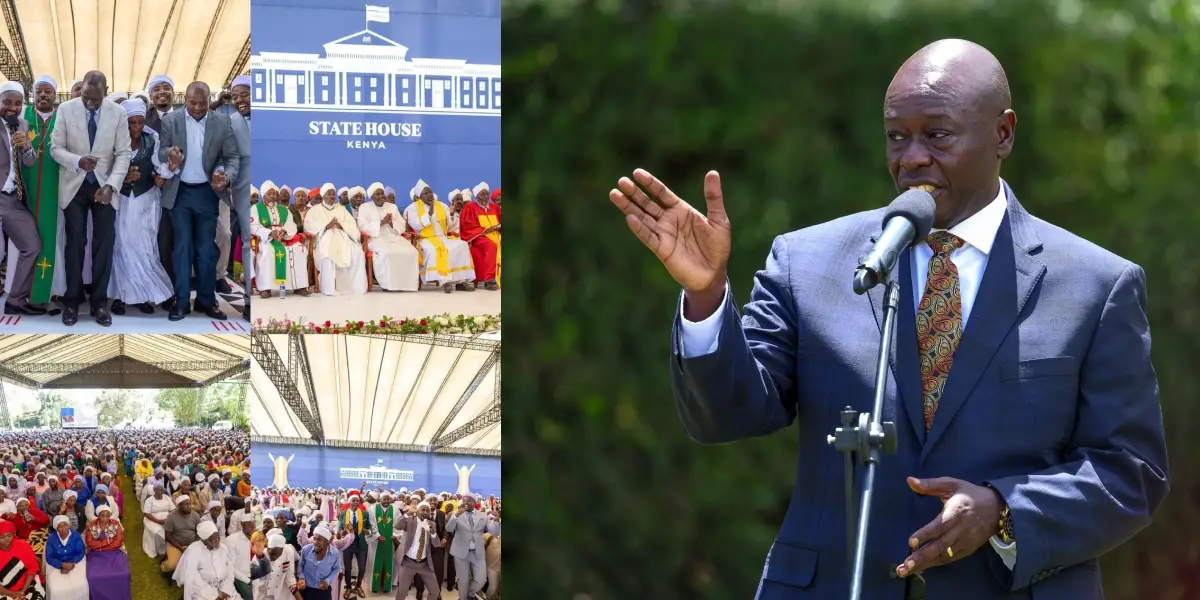
Former Deputy President Rigathi Gachagua has sparked fresh political debate after alleging that a recent Akorino thanksgiving event held at State House was not a purely religious gathering, but one allegedly filled with “brokers” and politically mobilised individuals.
The remarks have triggered strong reactions from political leaders and reignited discussions around the intersection of religion and politics in Kenya.
Gachagua claimed that only a small number of genuine Akorino faithful attended the event, alleging that most participants were not actual members of the church.
According to him, some of those present were “brokers” allegedly brought in for political purposes rather than spiritual celebration. He further suggested that the event was carefully staged, raising questions about its authenticity.
He also claimed that some attendees were given religious attire such as turbans to appear as members of the Akorino faith.
In his remarks, Gachagua also mentioned senior politician Moses Kuria, questioning the representation of certain political figures at the gathering.
His comments implied that some leaders were being presented in a religious light for political optics, a claim that has fueled further controversy.
The statements quickly attracted responses from government-aligned leaders, who defended the event as a legitimate religious celebration held at State House.
Supporters of President William Ruto maintained that State House has in the past hosted various religious groups and that such engagements reflect national inclusivity and freedom of worship.
Moses Kuria also pushed back against the claims, distancing himself from allegations about religious misrepresentation and defending the presence of different faith groups in national events.
The incident has once again highlighted Kenya’s recurring debate over the use of State House for religious gatherings and political symbolism.
Critics argue that such events risk being politicised, while supporters maintain that engaging religious communities is part of national unity and leadership outreach.
Gachagua’s remarks have added fuel to ongoing political tensions, turning what was meant to be a thanksgiving religious event into a wider political conversation. As responses continue to emerge, the issue is likely to remain a talking point in Kenya’s evolving political landscape.