Kiraitu Murungi to Ruto’s Critics: “You Don’t Know Who You’re Dealing With”

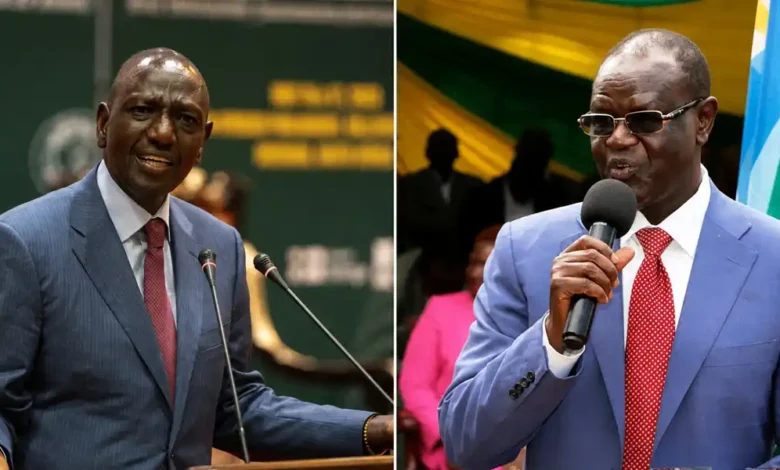
Former Meru governor Kiraitu Murungi has waded into the “wantam” debate, dismissing claims that President William Ruto will serve only one term.
Speaking at a funeral in Meru County on Saturday, July 11, Murungi pointed to Ruto’s unbroken record of election wins and urged the president’s critics to start planning for 2032 instead.
“There’s no election Ruto has ever lost”
Addressing mourners at the burial of Mzee Patrick Baikilanya, father of Igembe North MP Julius Taitumu, Murungi said he has known Ruto since they entered Parliament together in 1997 and that in all those years, Ruto has never lost a race. He cautioned critics not to underestimate the president’s political skill.
He also pointed to Ruto’s 2022 win over the government-backed Azimio coalition and its candidate, the late Raila Odinga, as evidence that betting against Ruto has historically been a losing move.
Leaning on history
Murungi argued that none of Kenya’s past presidents, Jomo Kenyatta, Daniel arap Moi, Mwai Kibaki, or Uhuru Kenyatta, served just a single term, and questioned why Ruto would be any different. It’s worth noting this is Murungi’s own framing of the historical record for political effect, not a neutral constitutional comparison, since Kenya’s electoral system has changed significantly across those presidencies.
He was dismissive of the protests and criticism that have followed Ruto’s government, pointing out that he personally protested against Moi as a university student and that Kibaki and Uhuru also faced sustained public pressure while in office. In his view, the current wave of anti-Ruto sentiment isn’t unusual enough to threaten his re-election bid.
The “wantam” (one-term) movement has become shorthand in Kenyan political discourse for the push to deny Ruto a second term, and Murungi’s remarks are a direct counter to that messaging ahead of 2027. Ruto himself was also at the funeral, using the occasion to announce infrastructure spending in the region, underlining how campaign positioning is already playing out at public events well before the election.