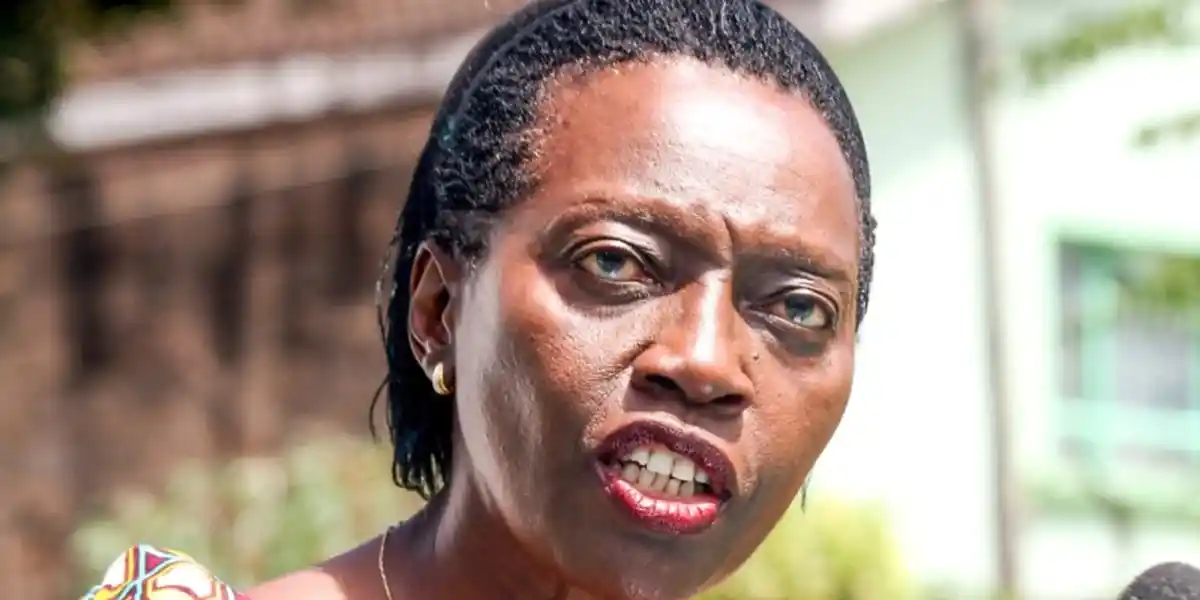
Martha Karua denies role in alleged manipulation of 2007 election after NTV documentary revisits dispute

Martha Karua has publicly rejected claims that she participated in manipulating Kenya’s 2007 presidential election, speaking out after a new television documentary revived long-standing allegations surrounding the controversial vote.
Karua, a senior Kenyan politician and former justice minister, responded online after an investigative documentary by NTV Kenya revisited events that unfolded during the tense vote tallying period in December 2007.
The programme reconstructed the final hours at the national tallying centre at the Kenyatta International Convention Centre, where electoral officials were compiling results from across the country in a closely contested race between Mwai Kibaki and opposition leader Raila Odinga.
Responding to accusations circulating online after the documentary aired, Martha Karua said she had openly supported Kibaki’s re-election campaign but denied participating in any effort to manipulate the vote.
“I was a staunch Kibaki supporter but did not aid or abet rigging or cause violence,” Karua wrote. She compared her role in the election to that of an agent supporting a candidate, similar to the role played by James Orengo for Odinga’s side.
Documentary revisits chaotic tallying process
The documentary highlighted witness accounts describing confusion and rising pressure inside the tallying centre as results trickled in from across the country.
I was a staunch Kibaki supporter but did not aid or abet rigging or cause violence the way @WilliamsRuto did landing him at The Hague . I was what @orengo_james was to @RailaOdinga an agent https://t.co/zXxhSgZpnn
— Martha Karua (@MarthaKarua) March 15, 2026
Former government spokesperson Alfred Mutua appeared in the exposé, recalling the tense atmosphere within government circles as early media projections suggested Odinga was leading the presidential race.
According to accounts in the programme, concerns grew that legal challenges could delay the official announcement of results, leading to intense discussions about ensuring the declaration was made quickly.
The programme also cited testimony from former police sergeant Nimrod Mbai, who said he was placed on standby during the tallying process. Mbai claimed he had been assigned to assist in evacuating the electoral commission chairman if violence broke out at the centre.
At the time, the electoral body was headed by Samuel Kivuitu, who faced intense scrutiny over how the results were announced.
Claims about pressure on media
The documentary also featured Waithaka Waihenya, who described pressure from political actors over the timing and manner in which the final results would be broadcast.
Witnesses interviewed in the programme alleged that during the confusion inside the tallying centre, the official declaration of the results was recorded in a separate room before being aired by state media.
Shortly after the announcement, Kibaki was sworn in at State House in Nairobi the same evening.
Election that triggered national crisis
The disputed results sparked widespread unrest across Kenya, leading to months of violence that left more than 1,000 people dead and hundreds of thousands displaced, according to reports from organizations such as the Human Rights Watch investigation into the post-election violence.
International mediation led by former UN Secretary-General Kofi Annan eventually produced a power-sharing agreement between Kibaki and Odinga in 2008, forming a coalition government that helped stabilize the country.
Debate over the integrity of the 2007 election has persisted for years. During a public event in March 2025, Royal Media Services chairman S. K. Macharia claimed Odinga had actually won the vote by a significant margin, alleging that officials were pressured to alter results.
Karua’s latest remarks add to the continuing political and historical debate over one of the most consequential elections in Kenya’s modern history.